A Complete Guide to the Flowers Hospital Internal Medicine Residency Program
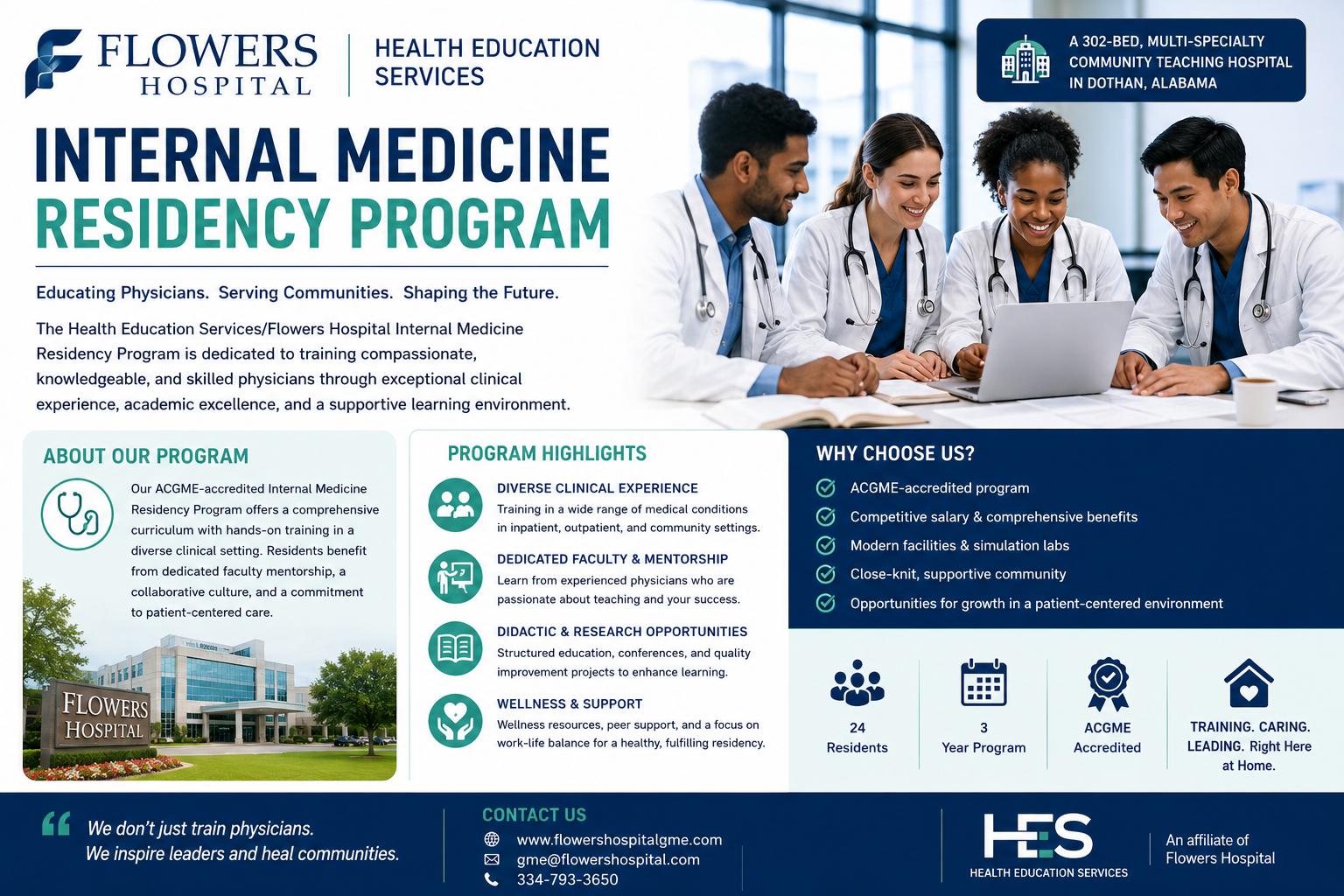
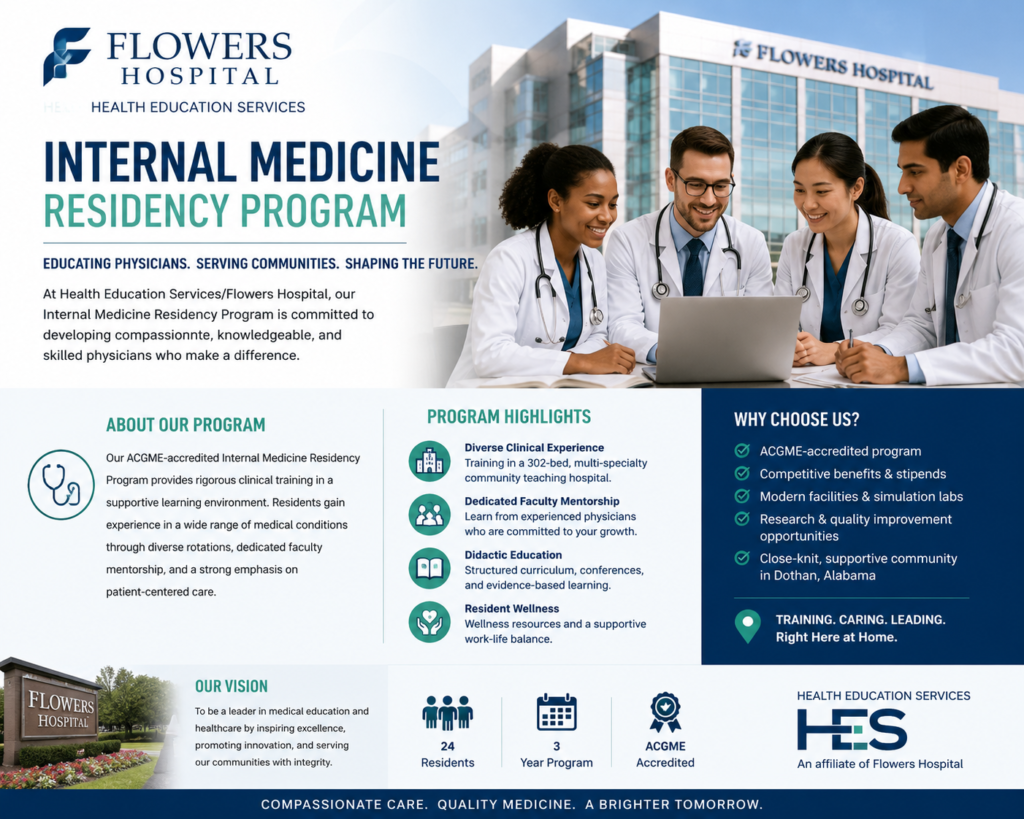
The Health Education Services/Flowers Hospital Program Internal Medicine Residency has become an increasingly discussed residency option for medical graduates looking for strong community-based training in the United States. Located in Dothan, Alabama, the program focuses on comprehensive internal medicine education, patient-centered care, scholarly development, and hands-on clinical experience.
For international medical graduates (IMGs), U.S. medical students, and aspiring internal medicine physicians, understanding the structure, curriculum, benefits, training environment, and career opportunities of this residency program is essential before applying.
In this detailed guide, we will explore everything about the Health Education Services/Flowers Hospital Program Internal Medicine Residency, including curriculum design, educational philosophy, hospital facilities, salary and benefits, application requirements, and why this residency program is attracting attention from applicants across the world.
Overview of the Flowers Hospital Internal Medicine Residency
The Internal Medicine Residency at Flowers Hospital is a three-year ACGME-accredited residency program designed to train future internists through a balanced combination of inpatient medicine, outpatient continuity care, intensive care exposure, subspecialty rotations, and academic development.
The program operates under Health Education Services and is based primarily at Flowers Hospital in Dothan, Alabama. The residency aims to produce compassionate physicians who are prepared for independent practice, hospital medicine, primary care, or fellowship training.
The educational philosophy of the program centers on two important principles:
- Scientific knowledge
- Empathetic patient care
This dual focus helps residents develop both strong clinical competence and excellent communication skills.
According to official program information, the residency emphasizes professionalism, evidence-based medicine, quality improvement, scholarly activity, diversity, and patient-centered healthcare.
Location and Training Environment
Flowers Hospital is located in Dothan, Alabama, a growing healthcare hub serving communities across south Alabama, southwest Georgia, and northwest Florida.
The hospital is a major regional referral center and provides residents exposure to a diverse patient population with a wide range of medical conditions.
About Dothan, Alabama
Dothan offers several advantages for medical residents:
- Affordable cost of living
- Lower housing expenses compared to large metropolitan areas
- Friendly community atmosphere
- Warm climate
- Reduced traffic and commuting stress
- Access to regional healthcare networks
For residents who prefer a quieter and more affordable lifestyle while still receiving strong clinical exposure, Dothan can be an attractive option.
Flowers Hospital Facilities
Flowers Hospital is a 235-bed healthcare facility that provides:
- Emergency medicine services
- Intensive care units
- Diagnostic imaging
- Surgical services
- Inpatient medicine
- Outpatient clinics
- Specialty care
- Rehabilitation services
Residents gain exposure to both inpatient and ambulatory settings throughout training.
The hospital also includes:
- Resident workspaces
- Call rooms
- Resident lounge
- Academic conference areas
- Continuity clinic facilities
The residency program uses modern educational infrastructure to support both clinical and academic learning.
Program Mission and Educational Goals
The mission of the Health Education Services/Flowers Hospital Program Internal Medicine Residency is to train competent, empathetic, and highly skilled physicians capable of practicing independently or pursuing fellowship training.
The residency focuses heavily on:
- Community-based medicine
- Longitudinal patient care
- Quality improvement
- Evidence-based practice
- Interdisciplinary teamwork
- Clinical reasoning
- Professionalism
- Resident wellness
Program leadership emphasizes that residents should graduate with both clinical excellence and a deep understanding of patient-centered healthcare.
Internal Medicine Residency Curriculum
One of the most unique features of the Flowers Hospital Internal Medicine Residency is its structured “X+Y” curriculum model.
What Is the X+Y Model?
Traditional residency programs often require residents to leave inpatient rotations to attend weekly continuity clinics. The Flowers Hospital program instead separates inpatient and outpatient responsibilities into blocks.
This model allows residents to:
- Focus completely on inpatient care during inpatient blocks
- Focus completely on continuity clinic during outpatient weeks
- Improve patient continuity
- Reduce burnout
- Enhance learning efficiency
- Improve workflow balance
The curriculum is specifically designed to create deeper immersion in each clinical experience.
PGY-1 Training Structure
During the first year of residency, trainees receive broad exposure to core internal medicine disciplines.
PGY-1 Rotations Include:
- Inpatient medicine
- Medical ICU
- Night float
- Cardiology
- Emergency medicine
- Neurology
- Electives
- Continuity clinic
The PGY-1 year focuses heavily on building foundational clinical skills such as:
- Diagnostic reasoning
- Patient stabilization
- Clinical documentation
- Team communication
- Evidence-based treatment planning
- Time management
Residents also begin developing continuity relationships with patients in clinic settings.
PGY-2 Training Experience
The second year increases resident responsibility and autonomy.
PGY-2 Rotations Include:
- Advanced inpatient medicine
- ICU rotations
- GI medicine
- Consult medicine
- Outpatient medicine
- Electives
- Continuity clinic
Second-year residents often supervise interns, coordinate patient care teams, and participate more actively in teaching.
This stage of training helps residents transition from learner to leader.
PGY-3 Senior Resident Year
The final year emphasizes leadership, advanced clinical judgment, and career preparation.
PGY-3 Features:
- Senior supervisory roles
- Increased elective flexibility
- Advanced outpatient exposure
- Mentorship opportunities
- Research leadership
- Board exam preparation
Residents are expected to function with greater independence while refining their long-term career goals.
Some graduates pursue:
- Hospitalist medicine
- Primary care
- Subspecialty fellowships
- Academic medicine
- Community internal medicine
Continuity Clinic Experience
Continuity clinic is one of the most important aspects of internal medicine training.
At Flowers Hospital, residents participate in continuity clinic every fifth week as part of the “+1” outpatient model.
This approach allows residents to:
- Develop long-term patient relationships
- Manage chronic illnesses
- Learn preventive medicine
- Improve outpatient communication skills
- Coordinate longitudinal care
- Gain experience in primary care management
Residents work in collaborative care teams to maintain continuity even when individual physicians rotate into inpatient services.
This system strengthens teamwork and patient follow-up.
ICU and Critical Care Exposure
Critical care medicine forms an essential component of residency training.
Residents at Flowers Hospital gain hands-on experience in:
- Ventilator management
- Sepsis treatment
- Shock management
- Critical care procedures
- ICU rounding
- Emergency stabilization
- Complex patient management
The ICU rotations are designed to improve decision-making under pressure and strengthen procedural confidence.
Didactics and Academic Conferences
The program includes extensive educational conferences and academic sessions.
Educational Activities Include:
- Weekly academic half-days
- Noon conferences
- Board review sessions
- Journal clubs
- Morbidity and mortality conferences
- Evidence-based medicine discussions
- Quality improvement lectures
- Ethics education
The curriculum aligns with the American Board of Internal Medicine (ABIM) blueprint to support board preparation.
Residents can also access educational material digitally through academic systems used by the program.
Research and Scholarly Activity
Research participation is encouraged throughout residency.
Residents are expected to complete scholarly activity projects before graduation.
Possible scholarly activities include:
- Case reports
- Research presentations
- Journal clubs
- Quality improvement initiatives
- Clinical studies
- Poster presentations
- Educational projects
The program reportedly provides financial support for conference participation and academic presentations.
Research exposure can strengthen fellowship applications and academic development.
Salary and Resident Benefits
Compensation and wellness benefits are important considerations when choosing a residency program.
Reported Salary Structure
- PGY-1: Approximately $58,000
- PGY-2: Approximately $60,000
- PGY-3: Approximately $62,000
Additional Benefits
Residents may receive:
- Health insurance
- Dental coverage
- Vision insurance
- Paid vacation
- Sick leave
- Educational stipend
- Conference funding
- Professional memberships
- Licensing support
- Board preparation resources
- Technology allowance
These benefits help support resident wellness and professional development.
